

If bedtime has become a nightly struggle in your house, you’re not alone. Many families ask about melatonin gummies or sleep supplements for kids and teens. Melatonin can help some children sleep better, but it is not a cure-all, and it is not the right choice for every child.
Here’s what parents should know.
What is melatonin?
Melatonin is a hormone your body naturally makes when it gets dark outside. It helps signal to the brain that it’s time to sleep. Melatonin supplements try to boost that natural signal.
They may help children:
- Fall asleep faster
- Adjust sleep schedules
- Reset sleep timing after schedule disruptions
But melatonin does not usually help children stay asleep through the night.
Does melatonin help kids sleep?
For some children, yes.
Research shows melatonin may be especially helpful for:
- Children with ADHD
- Children with autism spectrum disorder
- Teens with delayed sleep schedules
- Children struggling to fall asleep consistently
For otherwise healthy children, the benefit is usually modest.
Is it safe?
Short-term melatonin use appears relatively safe for most school-aged children when guided by a pediatrician.
Possible side effects may include:
- Daytime sleepiness
- Headaches
- Irritability
- Vivid dreams
There are still important unknowns about long-term use in children, especially around puberty and development.
What Parents Should Know
It’s important to understand common myths about melatonin.
MYTH: It’s natural, so it must be safe.
FACT: Melatonin is a hormone, and “natural” does not always mean risk-free. Because it is sold as a supplement, products may contain different amounts than listed on the label. Melatonin should always be stored out of reach of children, like any medication.
MYTH: More melatonin means better sleep.
FACT: Higher doses do not necessarily work better. Low doses are often just as effective and are meant to support the body’s natural sleep signals.
MYTH: Kids can use adult doses.
FACT: Children process melatonin differently than adults. A dose that seems small for an adult may be too strong for a child.
MYTH: Melatonin is a long-term sleep solution.
FACT: Melatonin is generally meant to be a short-term tool. Healthy sleep habits and behavioral approaches are still the most important part of improving sleep.
MYTH: Melatonin gummies are harmless, like candy.
FACT: Gummies can look and taste like candy, which increases the risk of accidental ingestion in young children. Pediatricians often recommend non-gummy forms and safe storage out of reach.
MYTH: Melatonin treats anxiety at bedtime.
FACT: Melatonin may help with sleep timing, but it does not treat anxiety. If anxiety is affecting sleep, your child may benefit from additional support from a pediatrician or behavioral health provider.
If my child’s pediatrician recommends melatonin, what dose should they take?
Melatonin doses vary based on a child’s age and the reason it is being used. Because melatonin is sold as a supplement rather than a regulated medication, product quality can vary. Some studies have found products with more or less melatonin than listed on the label, and occasionally other unexpected ingredients. The American Academy of Sleep Medicine recommends choosing products with a USP Verified mark, which indicates more reliable manufacturing standards.
The table below provides general starting points. Your pediatrician can help determine the best dose and formulation for your child.
Age group |
Typical starting dose |
Timing |
Notes |
Under 2 years |
Not recommended |
— |
Sleep issues at this age are usually behavioral and resolve with time |
Ages 2–5 |
0.5–3 mg |
30–60 min before bed |
Only with pediatrician guidance; start at lowest dose |
School-age |
1–3 mg |
30–90 min before bed |
Most kids don't need more than 3 mg |
Teens |
0.5–5 mg |
30–90 min before bed |
Higher doses are rarely more effective |
What actually helps sleep?
We recommend starting with proven sleep hygiene strategies. These approaches have the strongest evidence for improving sleep in children and teens. If you are considering a supplement, talk with your pediatrician first.
The most effective sleep tools are often the simplest:
- Keep a consistent bedtime and wake time, even on weekends. Consistency is one of the most important parts of healthy sleep.
- Create a calming bedtime routine with activities like reading, bath time, or quiet play.
- Predictable routines help signal the brain that it is time for sleep.
- Turn off screens at least 60 minutes before bedtime. Blue light from phones, tablets, and
- TVs can interfere with the body’s natural melatonin production.
- Keep the bedroom cool, dark, and quiet, and use the bed mainly for sleep.
- Avoid caffeine, especially in the afternoon and evening.
Melatonin works best when paired with healthy sleep habits, not instead of them.
When to Talk to Your Pediatrician
Reach out if your child:
- Regularly struggles to fall asleep
- Snores loudly
- Wakes frequently overnight
- Is excessively tired during the day
- Relies on melatonin long term
We can help determine whether melatonin makes sense and whether something else may be contributing to sleep problems.
Keep Reading
View All Posts
Behavioral Health Supplements for Kids & Teens
Curious about supplements for your child's sleep, anxiety, stress, or focus? Learn what the research says about popular supplements like melatonin, magnesium, ashwagandha, L-theanine, and saffron—and how to make informed decisions with your child's pediatrician.

Screen Time Recommendations
Learn the screen time guidelines for babies and toddlers, as well as how screen time can affect your child's growth and development.
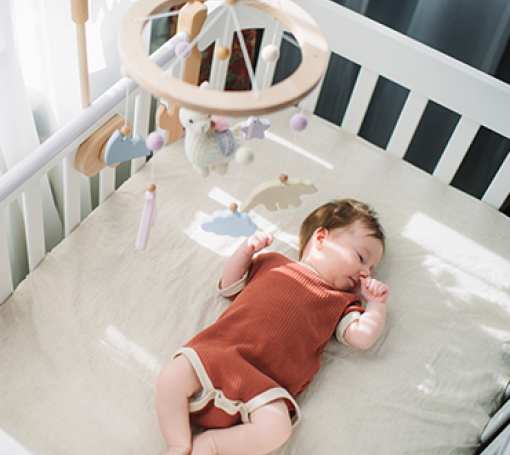
Learning to Sleep
Sleep is essential for growth and development. Learn how to create a sleep routine that encourages independence.