
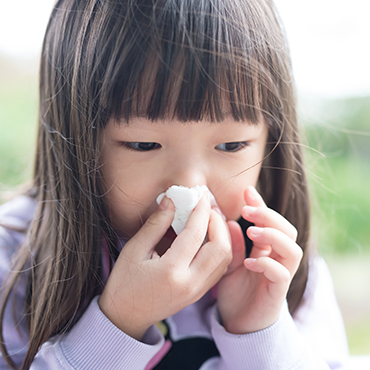
How to Stop Recurrent Nosebleeds in Children (Epistaxis)
Most nosebleeds in kids occur for a common reason such as allergies or trauma (hit in the nose or picking the nose). Rarely a child will be born with an abnormal blood vessel or a bleeding disorder.
To help your child’s nose heal, try the following:
Immediately after their nose starts to bleed:
- It takes 5 minutes for a clot to form, so you must hold pressure for that long by having your child pinch their nostrils together or by packing part of a cotton ball into the bleeding nostril. Please note that you should not have your child hold or tilt their head back when a nosebleed happens. This can be a choking hazard and may cause stomach upset due to blood entering the GI tract.
- If you keep “checking” to see if the bleeding has stopped, the clot will be disrupted, and you will have to start the 5 minutes over again.
- Remove the cotton gently as sometimes a clot will have stuck to the material, and you don’t want the bleeding to restart.
- Encourage your child to avoid picking their nose. That will break the clot/scab and restart the bleeding.
Treatment:
- If mucus is present, gently rinse it out. Consider using saline irrigation by squirt bottle. These kits can be purchased over the counter at any pharmacy.
- Spray 1 pump of over the counter allergy nose spray (such as fluticasone) in each affected nostril to reduce any swelling of the tissue inside the nose.
- Next, apply a thin layer of an over-the-counter water-soluble saline gel (such as Ayr® Gel) to the inside of the nostrils using a cotton swab (Q-tip®). This helps keep the nose moist and protects healing blood vessels.
- Consider running a humidifier in their room at night so their nose stays moist while sleeping.
- Encourage them to drink enough water to stay hydrated.
Repeat the nose spray and gel twice daily (morning and night) for at least a week. Stop when no bleeding has recurred for 7 days. If your child has nosebleeds triggered by allergies, they may need to transition to one squirt daily of allergy nose spray until pollen season ends.
Keep Reading
View All Posts
The Vitamin K Shot: One Small Step That Protects Your Newborn
All babies are born with low levels of vitamin K, putting them at risk for a rare but serious bleeding condition. A single vitamin K shot shortly after birth provides important protection during your baby's first months of life. Learn why the vitamin K shot is recommended for all newborns.
Understanding RSV
RSV, or respiratory syncytial virus, is a common childhood illness that affects the nose, throat, and lungs. Learn about the warning signs and information on when to seek care.

Tips for Navigating Flu Season
Getting a flu vaccine is one of the most effective ways to prevent the spread of influenza and reduce the risk of complications.